![[Home-style dish] Braised pork hock that's fatty but not greasy, and lean but not dry.](/upload/20260128/8117337e515cad.webp)
This year, on my father-in-law's birthday, I asked him what he wanted to eat, and he said he wanted braised pork hock (should be pork hock or trotter). I almost didn't know what to do! 😂 Pork hock is a staple dish at banquets, and I had never braised it before, nor did I think it was particularly delicious at banquets. 😂 But since my father-in-law had mentioned it, I tried to satisfy him. Luckily, I had braised duck gizzards before, so I tried a similar method to braise a pork hock, and it was a success on the first try! The fatty parts were oily but not greasy, the lean parts were tender but not dry, and the skin was chewy and delicious! My father-in-law was very satisfied, and I also thought it tasted better than what you get at restaurants, so I'm sharing this with you today! Related trivia: "Pork hock" and "trotter" both refer to the meaty part connecting the pig's trotter and leg. Northerners call it trotter (official name), while southerners call it pork hock (local name), but in northern Fujian, we generally call it "fat hoof". Related Links: Braised Duck Gizzards https://www.xiachufang.com/recipe/104707640/ Method for Crushing Large Pieces of Rock Sugar http://www.xiachufang.com/recipe/103872353/
Materials
[Home-style dish] Braised pork hock that's fatty but not greasy, lean but not dry: Recipe steps
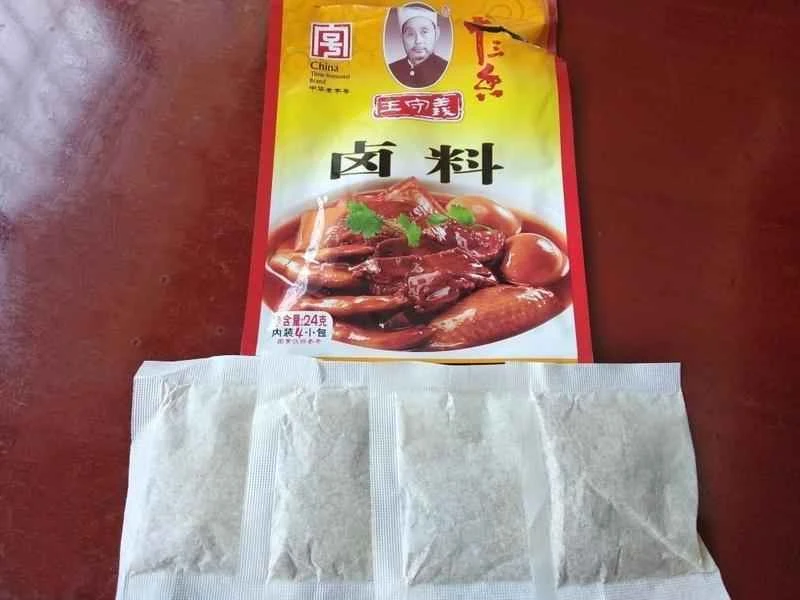
I usually use Wang Shouyi braising spices, which come in four small packets. The instructions say to use one packet for every pound of meat, but you can actually use one packet for every two pounds of meat!
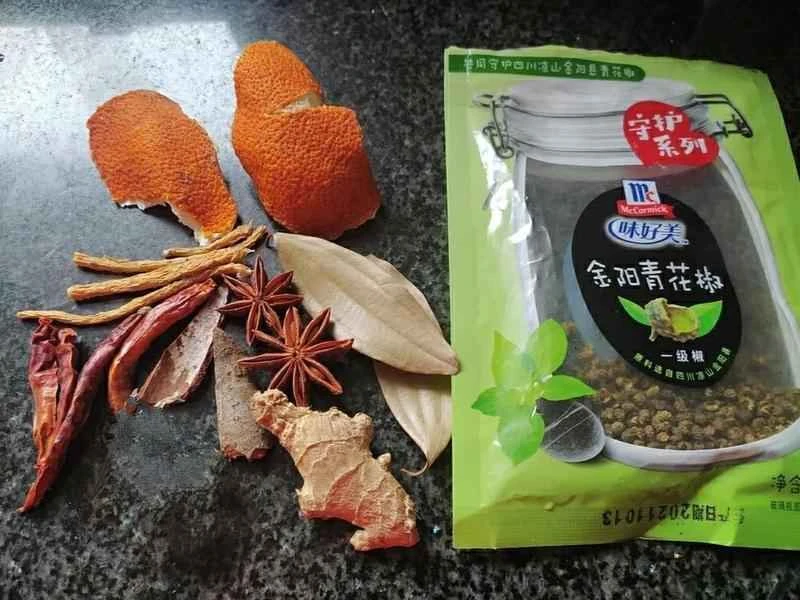
If you don't have a spice packet, you can mix and match whatever you like. I've used ginger, orange peel, bay leaves, star anise, cinnamon, angelica, Sichuan peppercorns, and chili peppers, and the results were pretty good!
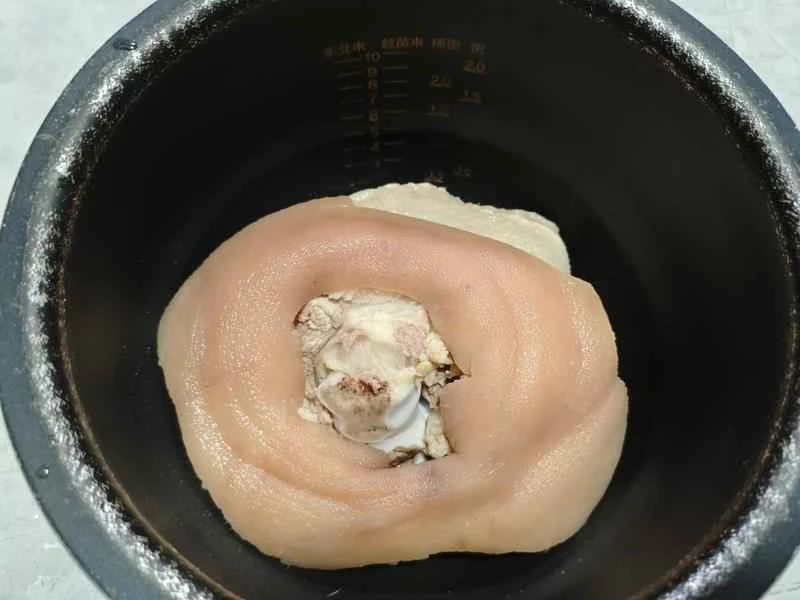
Clean the pork hock, remove the bones and pieces, pluck the hair, and blanch it. Place it in a rice cooker with an appropriate amount of water and seasonings. The seasonings include 1 packet of Wang Shouyi braising spices, 1 handful of Sichuan peppercorns, 1 handful of rock sugar (20g), 1 piece of ginger, 1 piece of dried tangerine peel, 1 small red chili pepper, 10g of salt, 10g of dark soy sauce, and 10g of cooking wine.
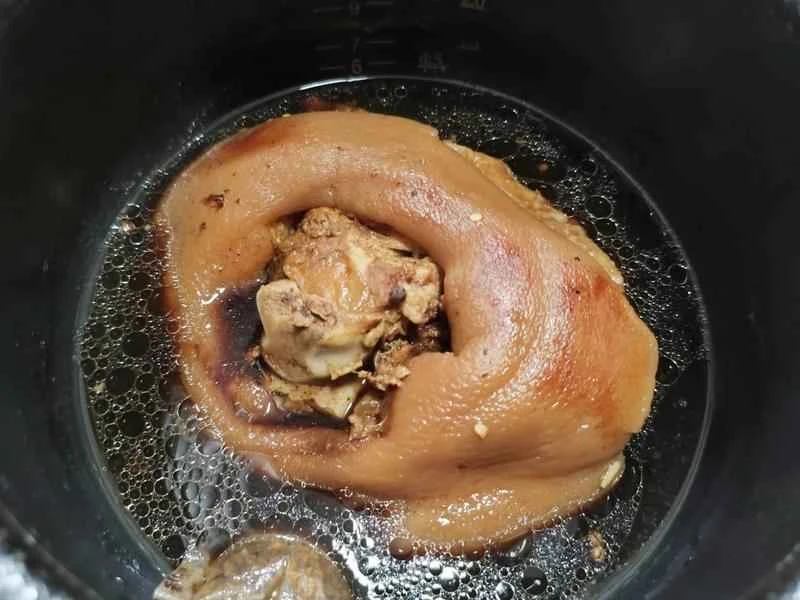
Use the soup function (1.5 hours) on a rice cooker to cook it. If you are in a hurry, you can also choose the steaming function and set it for 1 hour. The cooked pork hock is cooked, but it is not yet flavorful because the seasonings are in the soup!
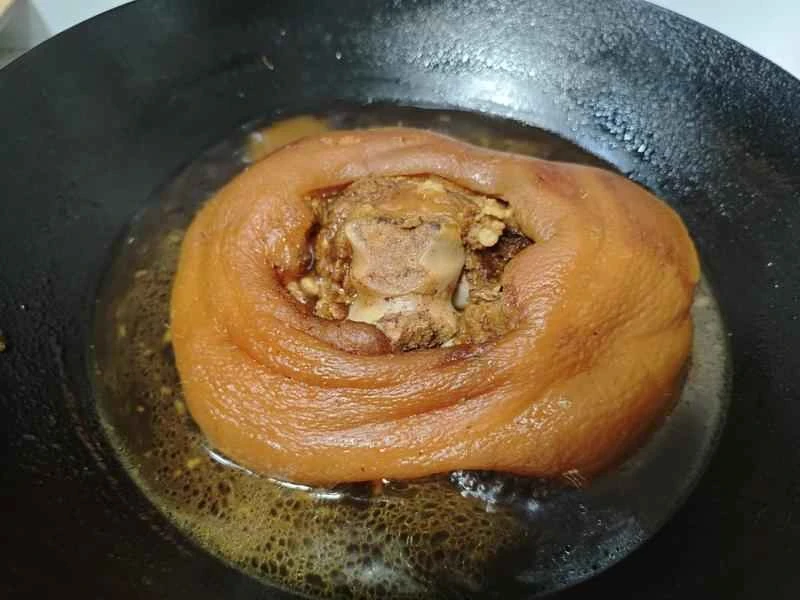
Carefully lift the pork hock out and place it in the pot. Filter the broth and pour it back into the pot to reduce the sauce.
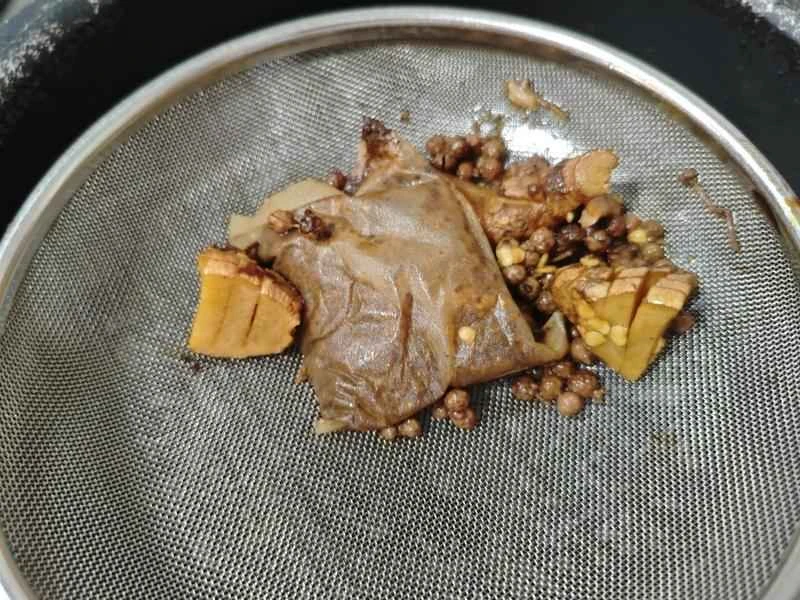
Before reducing the sauce, be sure to remove all seasonings, especially the spice packet. If it cracks during the reduction process, it will seriously affect the taste and appearance of the finished product!
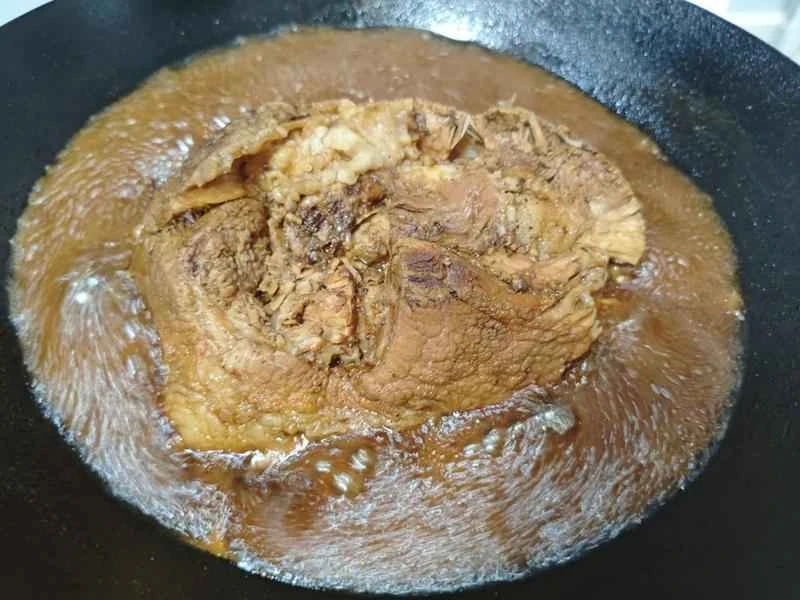
First, reduce the sauce over high heat, then medium heat (without covering). Stir occasionally to prevent burning. Be especially careful when stirring, as you need to maintain the perfect shape of the pork hock while avoiding splattering the sauce and getting it on the counter and your clothes!
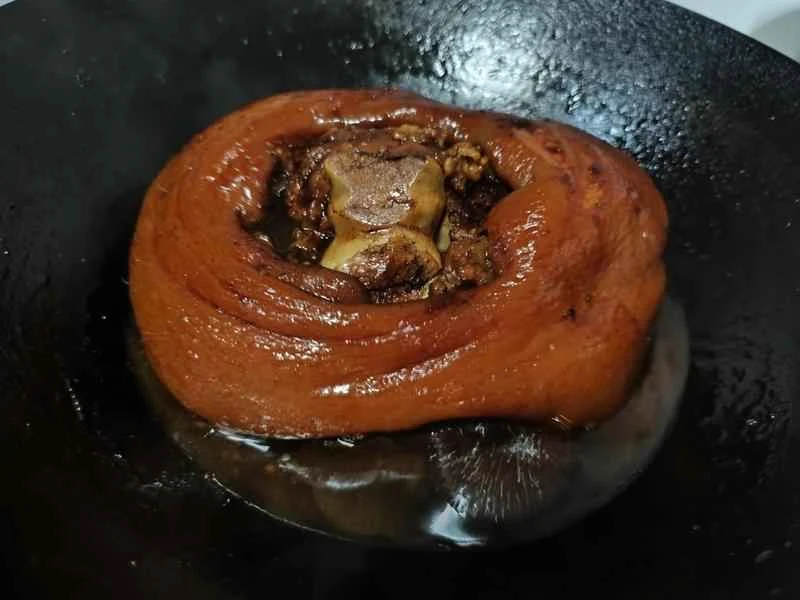
Don't reduce the braising liquid too much. If you think the color is too light, you can add a little dark soy sauce for color!
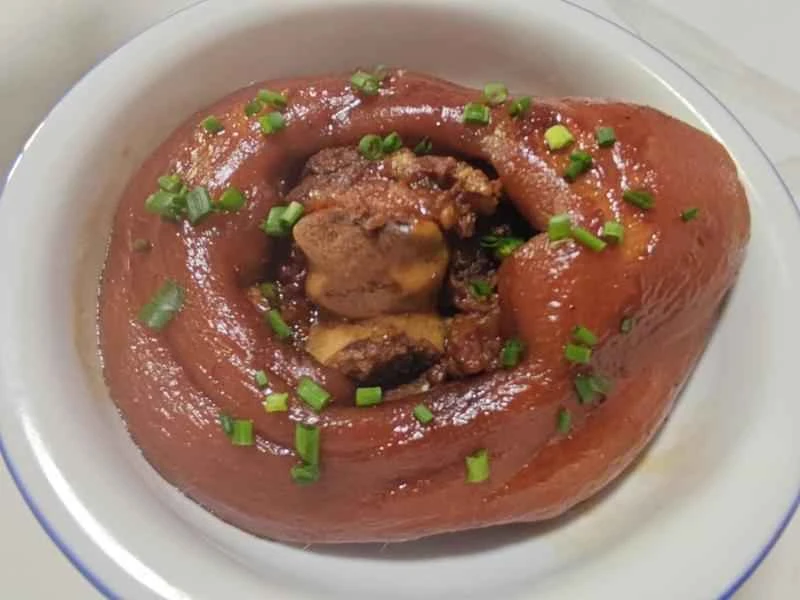
Remove from heat and garnish with chopped scallions! The fatty part is oily but not greasy! The lean part is tender but not dry!
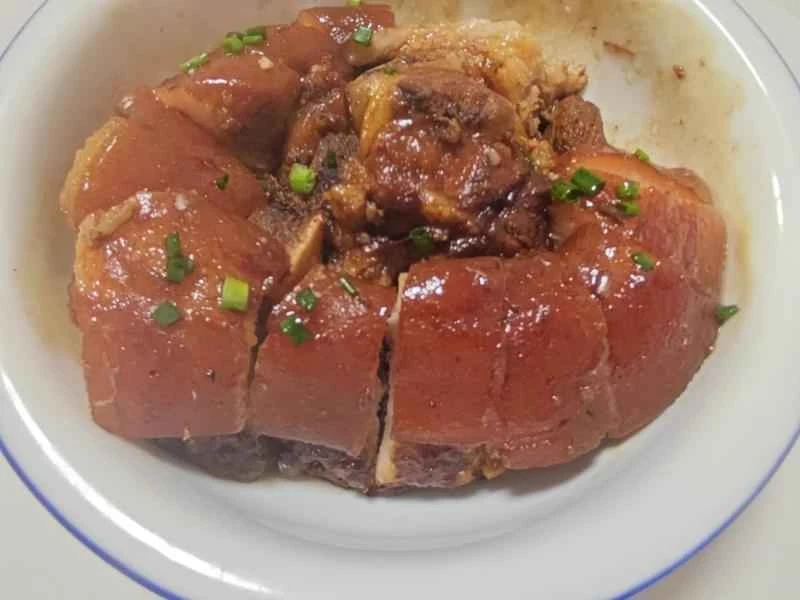
After taking the photo, use scissors to cut it into large pieces around the edges for easy handling!
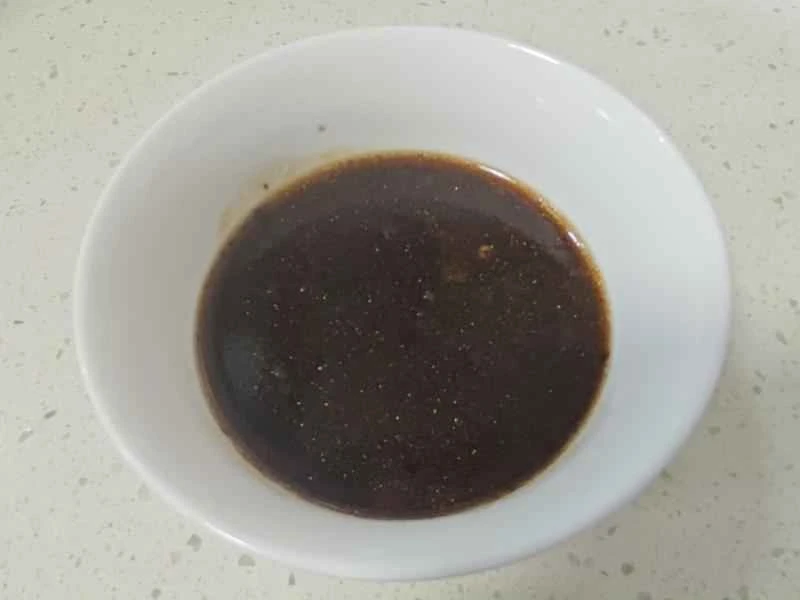
The remaining braising liquid, mixed with a little balsamic vinegar and garlic, makes a perfect dipping sauce!
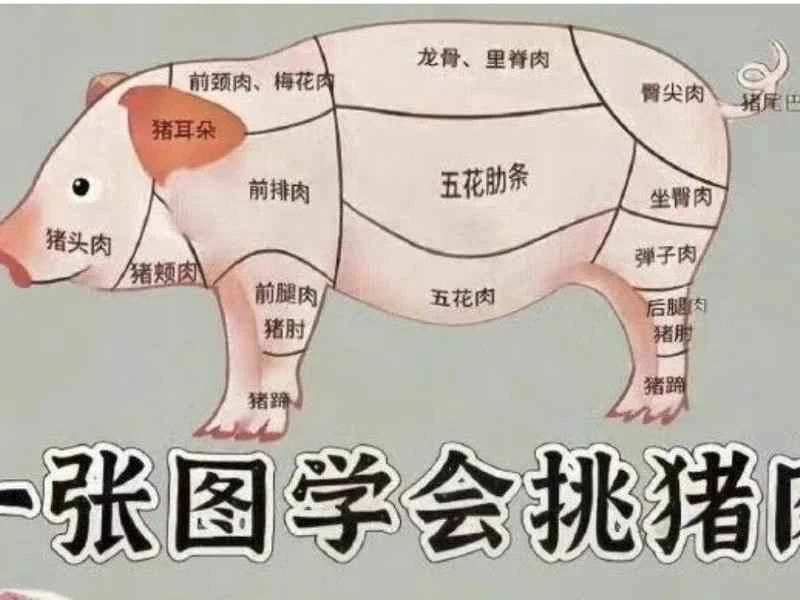
I've looked at a lot of pictures, but none of them have the location of the pork hock marked. I personally think it should be the flesh around the top of the thigh!
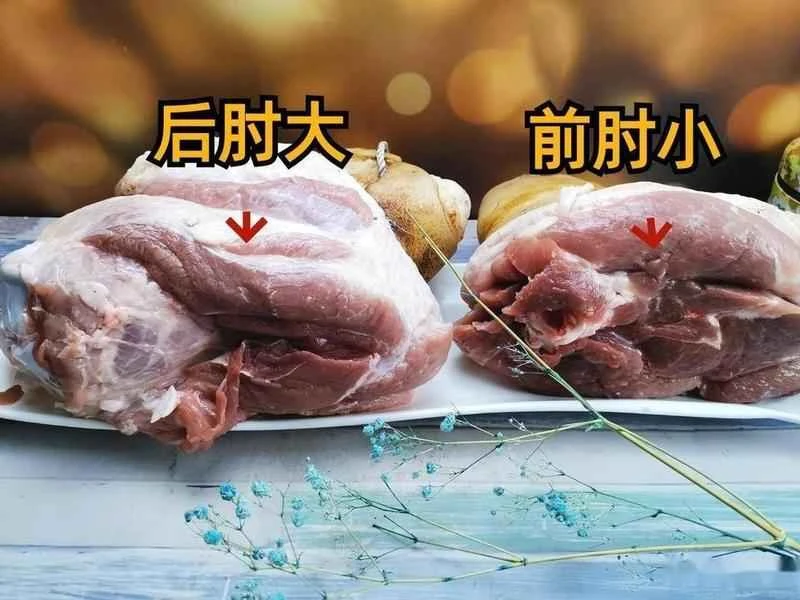
The difference between the front and hind legs: The hind legs have more meat and are larger, while the front legs have less meat and are smaller!

The difference between pork hock and pork knuckle: Pork hock is equivalent to the upper part of the leg, while pork knuckle is equivalent to the thigh part!
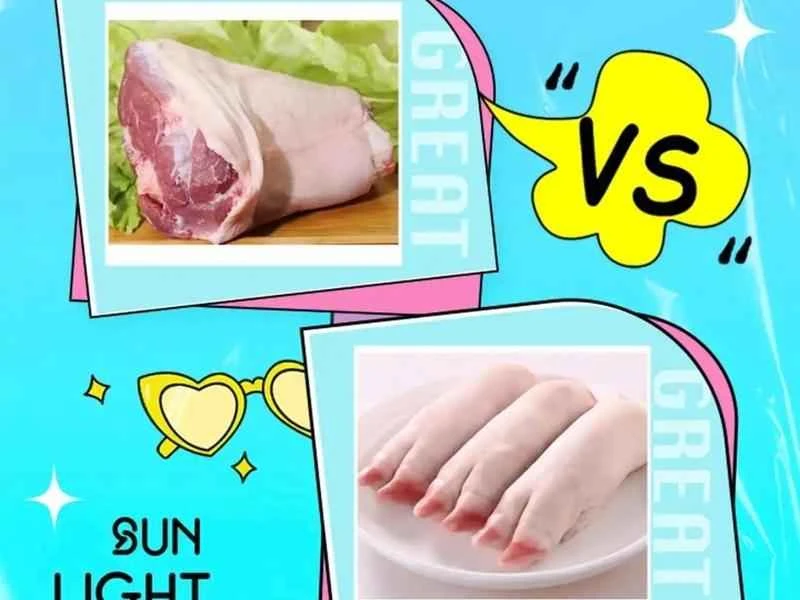
The difference between pork hock and pig's trotter: Pork hock is equivalent to the thigh, while pig's trotter is equivalent to the calf!
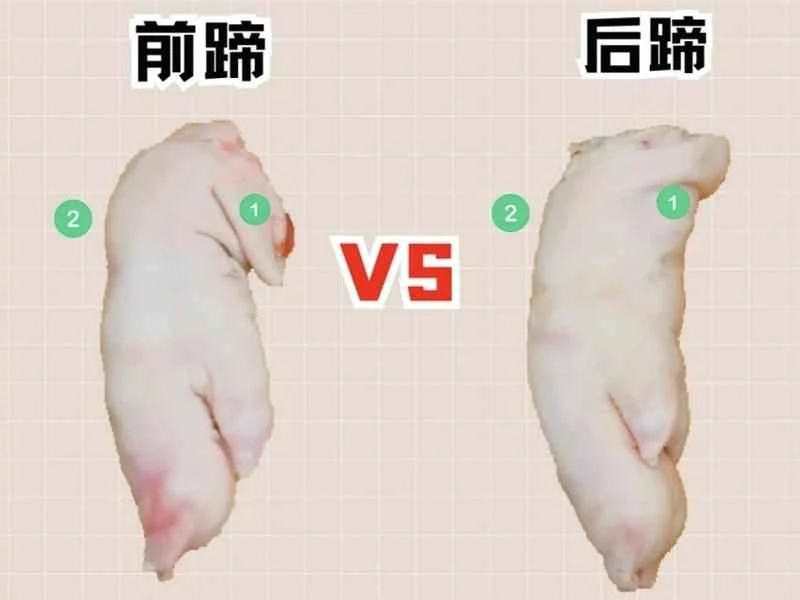
Differences between forelegs and hind legs: Forelegs: more wrinkles, even toes, thick tendons, and flexible joints. Hind legs: fewer wrinkles, uneven toes, thinner tendons, and less flexible joints.