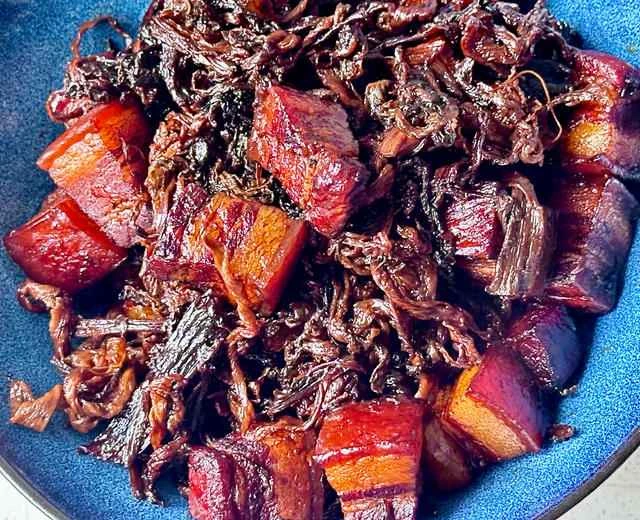
Braised pork with preserved mustard greens is a dish I've enjoyed since childhood; my grandmother makes it every year. Here, I'll teach you a simple, home-style recipe. While some online tutorials may suggest using many different seasonings, I don't recommend that beginners, as it's difficult to control the amounts and can result in an odd flavor. The steps will also include some important points and suggestions on different seasoning options.
Materials
Braised Pork with Preserved Mustard Greens (Home-Style Version) - So delicious with rice! You'll never get tired of it!!! Here are the steps to make it.
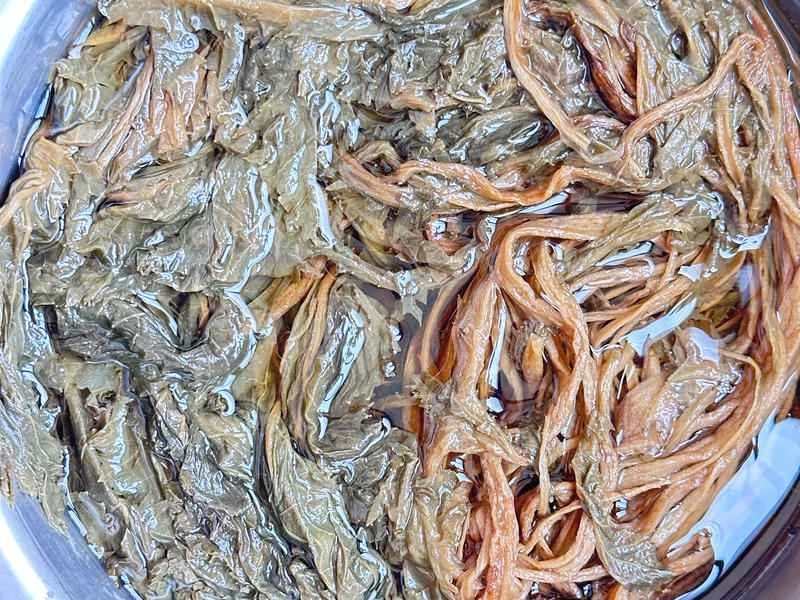
Preparing the dried plum vegetables is very important! This time I used a whole one made by a farmer in Shaoxing. It was quite salty, so I rinsed it several times with water and then soaked it in warm water in a bowl for more than half an hour. If you bought pre-cut plum vegetables, take the appropriate amount according to your preference. Usually, one pound of pork belly requires 150-200 grams (dried), which is about one bowl. If the plum vegetables are relatively clean, you don't need to wash them as many times.

To make braised pork belly look better, you can buy it from a fresh food store; it's usually neatly cut into sections, with little hair, and relatively clean. You can also choose freshly cut pork belly from a butcher shop, selecting pieces with nicely layered fat. If you're particular about the appearance when cooking at home, you can scald the skin in a hot pan and scrape it off. Normally, if there's hair, you can simply scrape it off with a knife while washing it.

Add water to the pot to submerge the pork belly, then add the three essential ingredients to remove any unpleasant odor: scallions, ginger, and cooking wine. Bring to a boil over high heat, then simmer for about ten minutes.
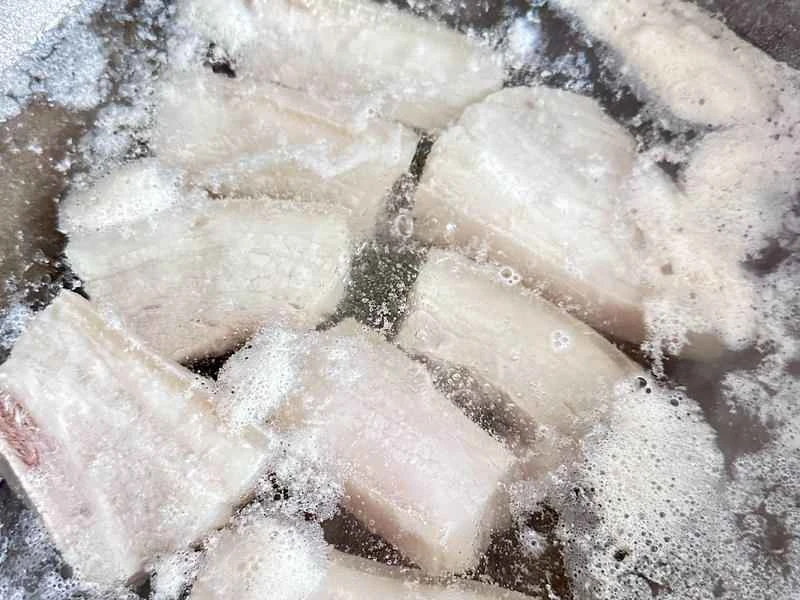
During the process, some blood foam will come out. If your kitchen sink is connected to a water heater, you don't need to skim off the blood foam. Just rinse it with warm water from the tap after blanching. It's simple and convenient! Then put it aside to cool naturally for a while and drain the water!
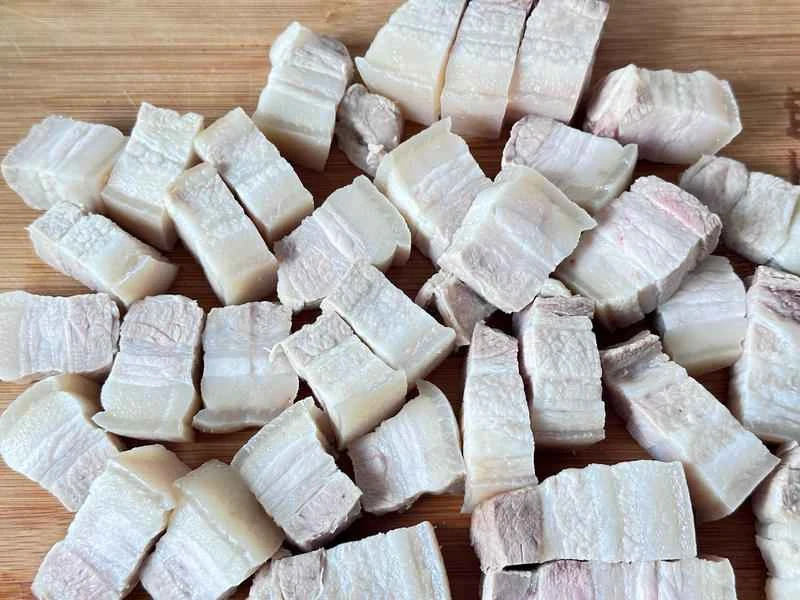
After draining the pork belly, cut it into cubes. (While the pork belly is draining, you can prepare the seasonings in advance to prevent it from burning when you're in a hurry later. Ingredients: eight or nine small rock sugar pieces, two star anise, three or four slices of ginger, a small piece of scallion, and dark soy sauce.)
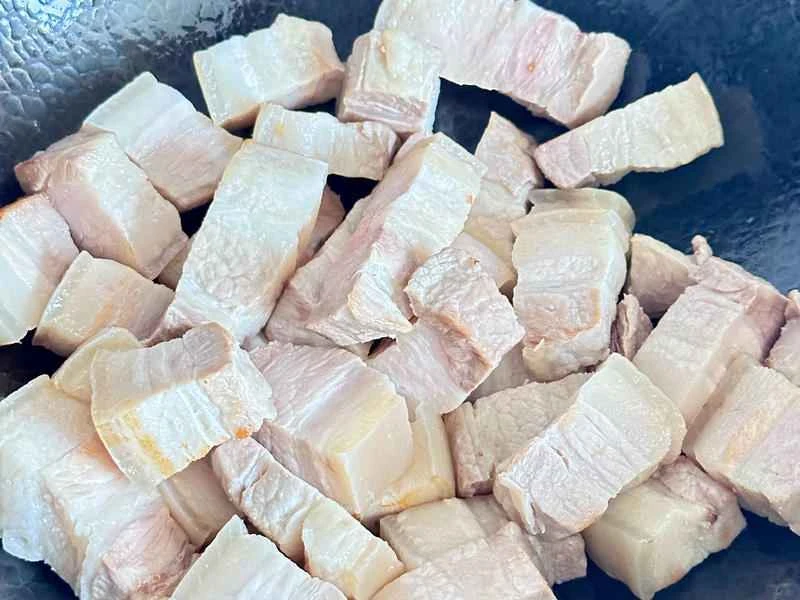
Heat a little oil in a pan over low heat. First, add rock sugar. When the rock sugar melts and turns into a caramel color with small bubbles, add the chopped pork belly.
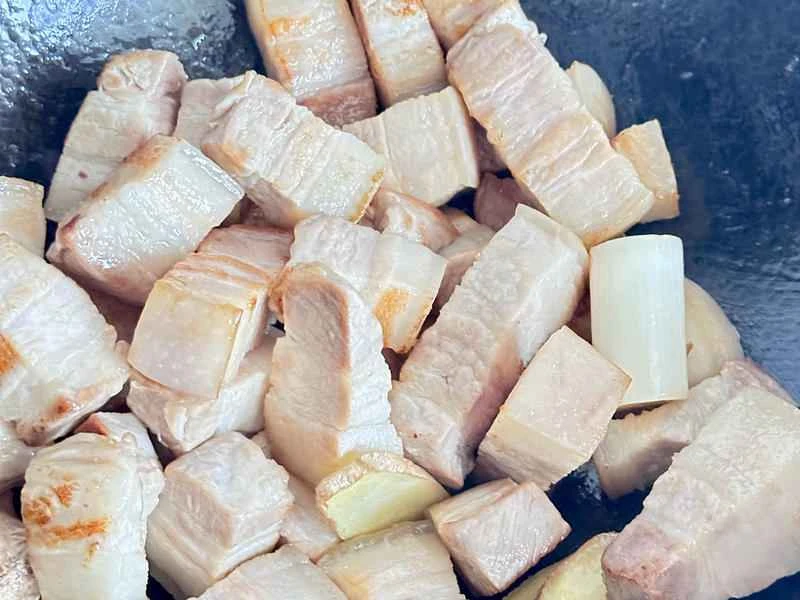
Stir occasionally with a spatula over low heat. Don't rush this step; let the excess fat from the pork belly render out and allow the meat to undergo a Maillard reaction with the caramelized sugar.
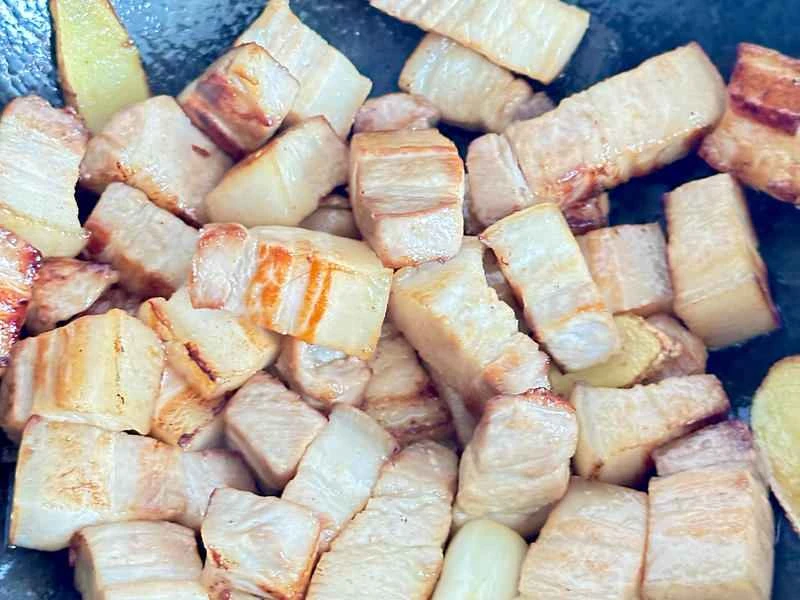
After stir-frying for about four or five minutes, add star anise, ginger, and scallions to the pan and stir-fry quickly to release their aroma from the hot oil. (For regular home cooking, you can omit the scallions.) (I added a small dried chili pepper to balance the richness, but this is optional.)
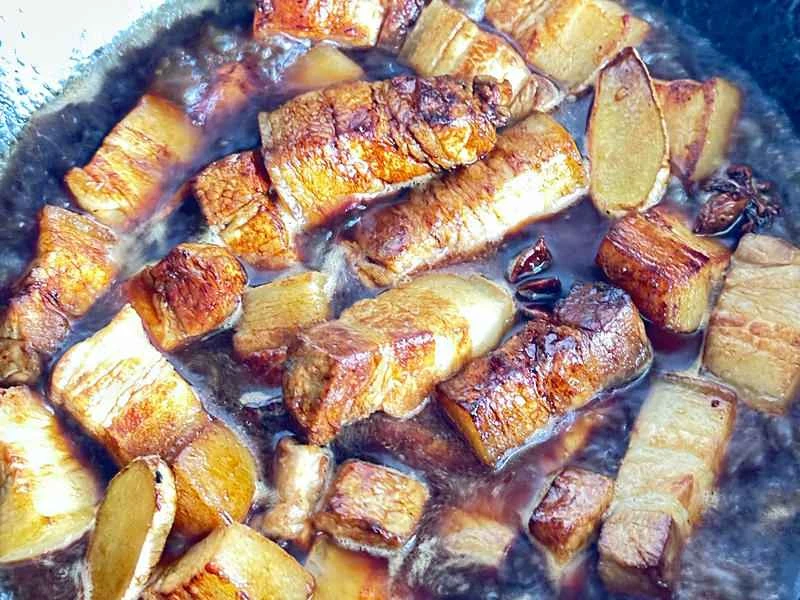
Then add about two small tablespoons of dark soy sauce and stir-fry quickly. Here's the key! Add boiling water to the pot! Boiling water! It should clearly submerge the pork belly; don't add too little water. (If you don't have boiling water, warm water is fine too; adding cold water will make the meat tough.) (Alternatively, for better flavor, pour in a can of beer, but don't add too much water then.)
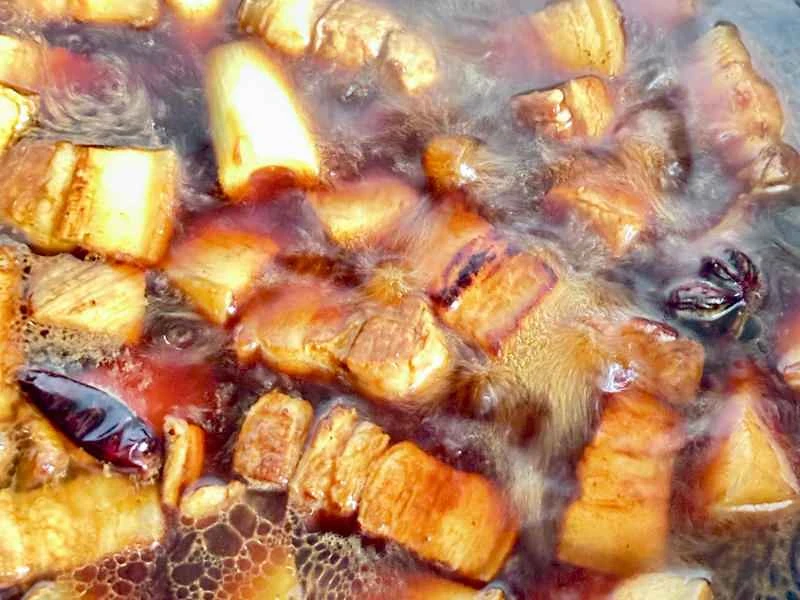
After bringing it to a boil over high heat, stir a few times, then reduce to low heat, cover, and simmer for about half an hour. Beginners should check frequently to prevent the water from getting too low or the heat from being too high and causing it to boil dry prematurely.
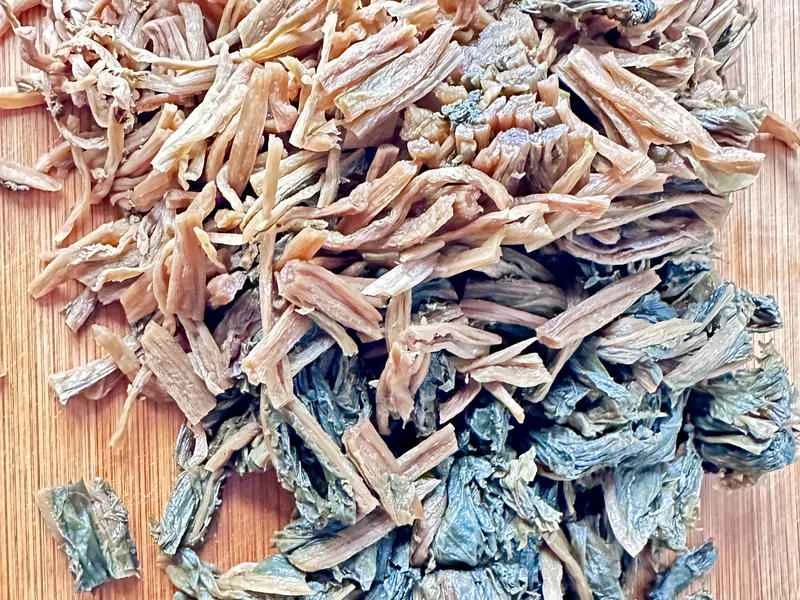
During this time, we took out the soaked preserved mustard greens, squeezed out the water by hand, and cut them into sections.
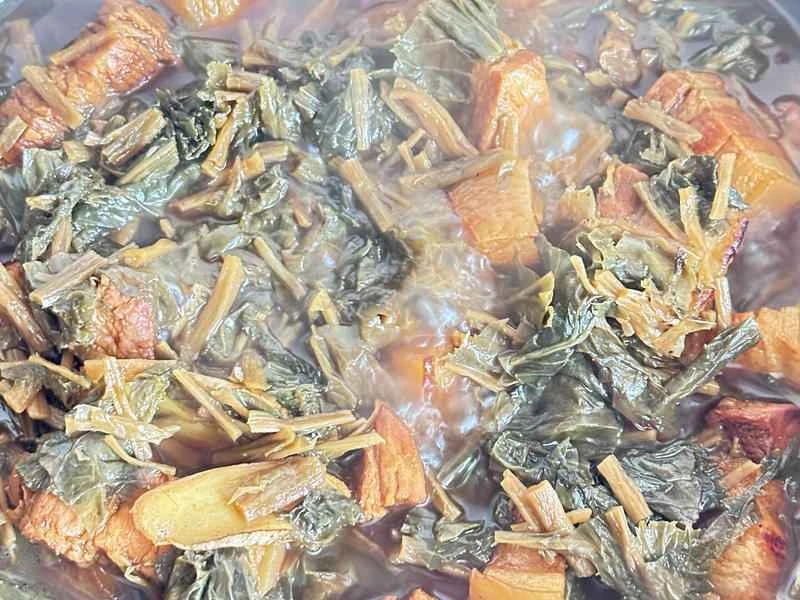
After the meat has been simmering in the pot for about half an hour, add the dried mustard greens, stir-fry a few times, and continue to cook with the lid on for about twenty minutes. Beginners should check frequently to prevent it from drying out prematurely.
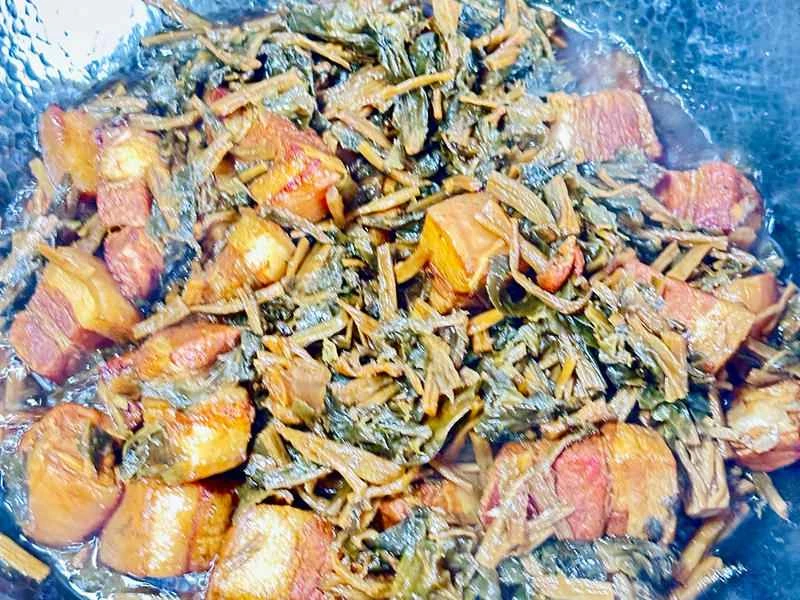
At this point, it's almost time to remove it from the heat. Add a little salt, stir-fry a few times, and taste the braising liquid if you're unsure about the saltiness. (The purpose of adding salt here is mainly to bring out the aroma of the ingredients; don't add too much, as the preserved mustard greens are already pickled, otherwise it will be too salty.) Cover the pot and continue cooking for about ten minutes, checking how much liquid has reduced. If there's still a lot left, turn up the heat slightly. Then you can turn off the heat and serve!